CORRUGATED CARDBOARD

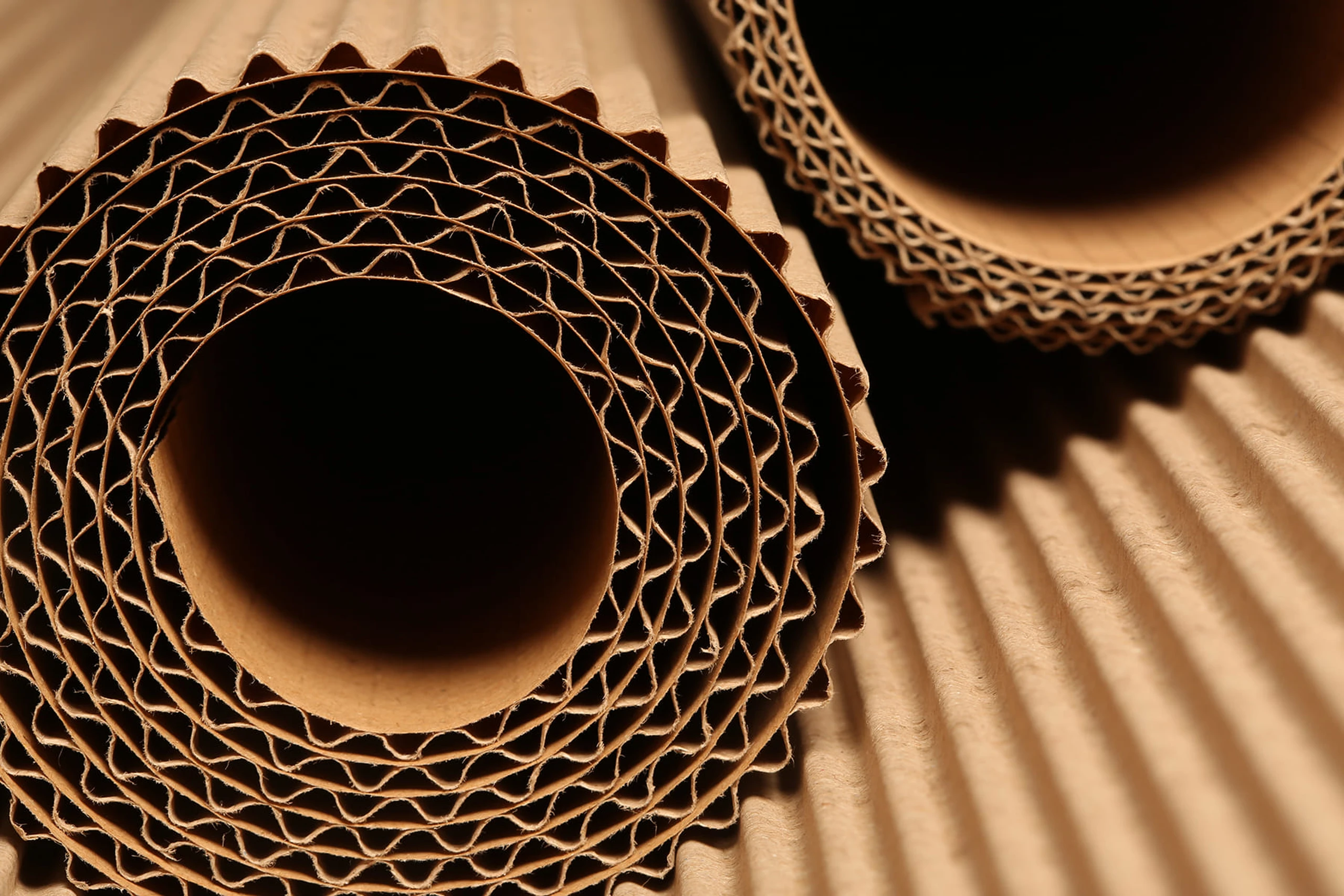
Corrugated cardboard is a highly ecological paper product composed of a corrugated layer and one or two layers of smooth paper. These products are widely used in the production of packaging and shipping containers.

Corrugated paper (folded paper) was patented in England in 1856, where it was used as inserts for tall hats. Corrugated cardboard was not patented or used as shipping material until 20 December 1871. A patent was issued to Albert Jones of New York City for two-ply corrugated cardboard. Jones used this corrugated cardboard for packaging bottles and for glass lantern chimneys. The first machine to mass produce corrugated cardboard was constructed in 1874 by a Mr. G. Smyth, with Oliver Long improving on Jones’s original machine to produce three-ply corrugated cardboard with smooth paper enclosing the central corrugated layer on both sides. He discovered the corrugated cardboard that remains in use today in the modern age.

Corrugated cardboard is characterised by 3 basic parameters: the number of corrugations, size of the corrugations and colour.


Types of corrugations and their characteristics:

Types of corrugations Number of corrugations
per metre
Corrugation thickness 
(mm)
A 108 +/− 10 4.8
B 154 +/− 10 3.2
C 128 +/− 10 4.0
E 295 +/− 13 1.6
F 420 +/− 13
0.8
THIS WEBSITE USES COOKIES
By clicking „Accept All“, you consent to their storage on your device, which helps with site navigation, data usage analysis, and our marketing efforts.
Find out more
  1. They are necessary for the site to work, so it is not possible to turn them off. They are usually set up in response to actions you have taken, such as requesting services related to security settings, logging in, filling out forms, and so on. You can set your browser to block cookies or send notifications about them. Keep in mind that some pages without these files will not work. These cookies do not store any personally identifiable information.
  2. They help track the number of visitors and also the source of the traffic, which allows us to improve the performance of the site. With them, we can determine which sites are the most popular and which are not popular, and we can also track how visitors navigate the site. All information that cookies collect is aggregated and anonymous. If you do not enable cookies, we will not know when you visited our site.
  3. These cookies can be set on our site by advertising partners. They can use them to profile your interests and show you ads on other sites. However, they do not store your personal information directly, but through the unique identifiers of the browser and Internet device. If you don't enable them, you'll see less targeted promotion on your site.

You can change or revoke your consent at any time by clicking on the Cookies link in the footer of the website.